Manning: the bird decides the pace
A newly acquired falcon — whether a wild-caught passage bird or a captive-bred eyas — arrives stressed. Mann it by keeping it in a quiet, dim room on the fist or on a perch, hooded when necessary, and simply being present. Feed small amounts by hand so the bird learns that you are the source of food, not a threat. This stage takes days to weeks. Rushing it produces a bird that will never settle.
Flying weight is a discipline, not a number
A falcon is flown at a weight low enough to want food but never low enough to lose condition. Weigh the bird twice daily on a perch scale, log every feed, and reduce gradually — a few grams at a time. Watch the keel bone: you should feel a thin covering of muscle and fat, not a knife edge. Underweight birds become ill, not obedient.
The creance and first flights
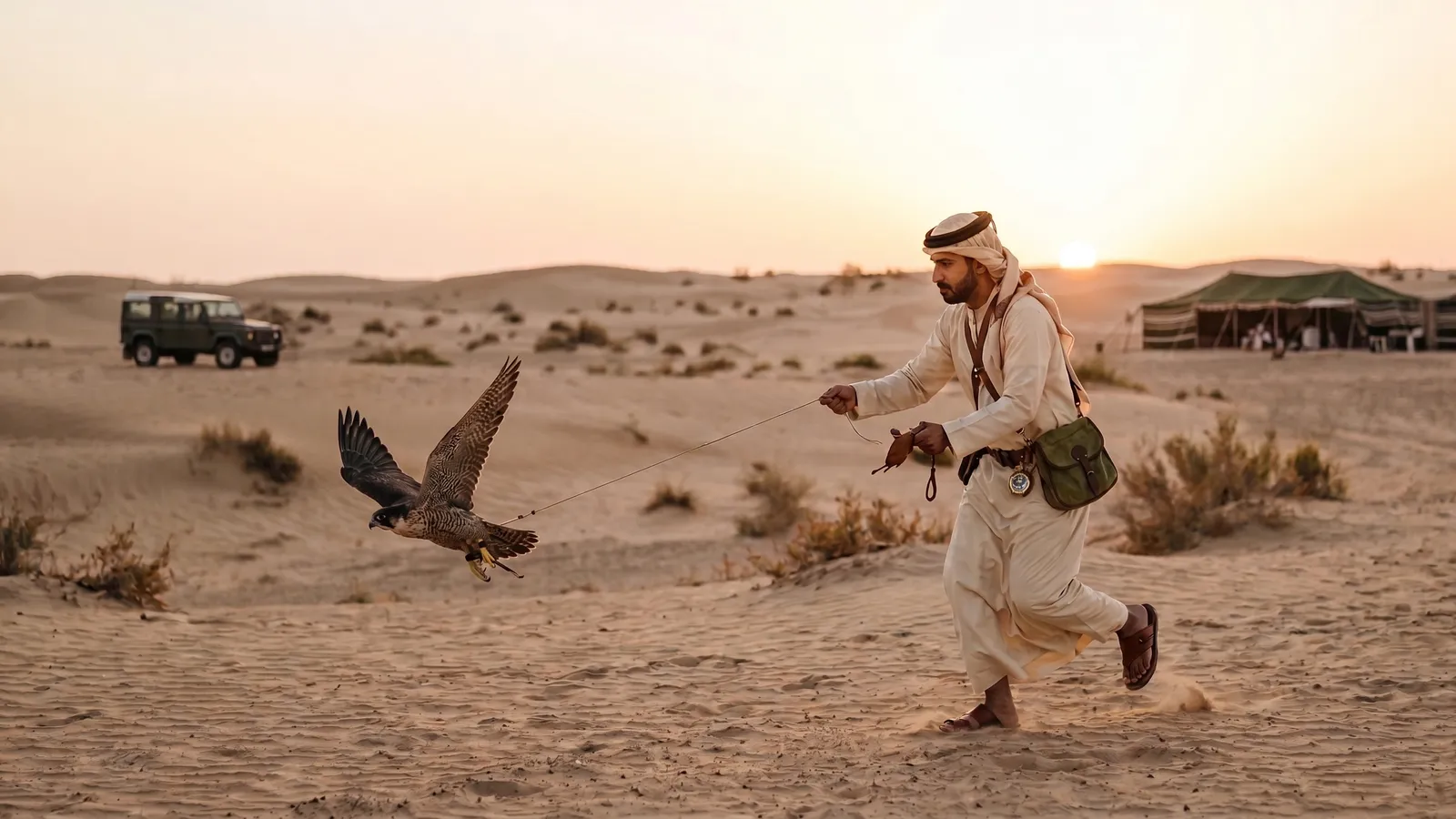
Before free flight, work the bird on a creance — a light training line of 15–30 metres. Call it to the lure or the fist for a food reward, increasing distance only when the response is instant. Wind the line neatly; a tangled creance around a talon is how legs get broken in the yard.
Health in the Gulf season
The falconry season here runs roughly October to March, and birds are flown hard. Between flights keep shade and fresh water available at all times, check feet and jesses for wear daily, and never leave a hooded bird on a perch in direct sun. Bumblefoot starts as a small reddened patch on the pad and ends as months of treatment — a clean perch surface and correct jess fit prevent almost all of it.
- Casting: a falcon needs to cast pellets. Provide roughage (fur or feathers) with feeds.
- Never fly a bird in moult — it is out of condition by definition.
- A veterinary check before the season catches aspergillosis and bumblefoot early.
This summary is provided for convenience. The full registered text governs.